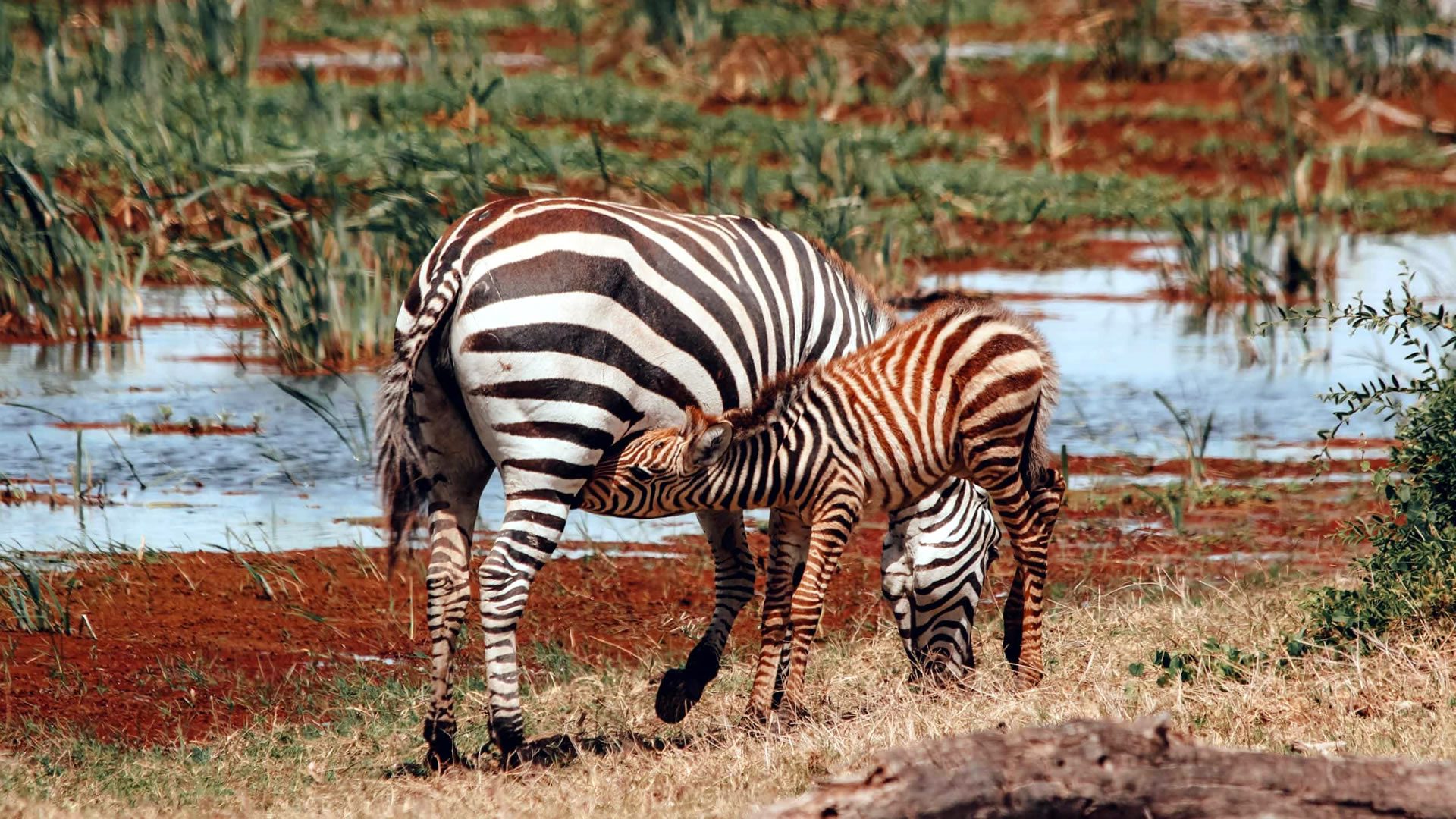
Ngorongoro Crater is part of the Ngorongoro Conservation Area, a UNESCO World Heritage Site that spans 8,300 sq km (3,200 sq miles) across Tanzania’s Crater Highlands. Away from the hive of activity around the crater you can take in more volcanic scenery, including two smaller craters — Olmoti and Empakai. You also have the sheer cliffs of the Great Rift Valley, and the vivid waters of Lake Natron, a salt and soda lake tinged raspberry and orange by salt-loving microorganisms. There are lots of hiking opportunities in these untouched areas, taking you through forests, grasslands and rocky outcrops, and into volcanic craters along Maasai cattle trails. You can also spend time in Maasai communities for an authentic taste of their culture, where you can have a go at herding cattle and visit a local soko (market).
Within the Ngorongoro Conservation Area is Olduvai Gorge, one of the most significant sites for hominid fossil discoveries in the world. It was in this steep-sided gorge that the earliest known human ancestors lived just under two million years ago, and some of their petrified remains were found here during the mid-20th century. You can visit the gorge’s museum, where real fossils and casts of the early human skulls are on display.are miles) on Tanzania’s northern border with Kenya. The park is famous for its vast, open grasslands, which allow for excellent sightings of the abundant wildlife. Tanzania’s oldest game reserve, it is also one of the oldest ecosystems on earth and its climate and vegetation have remained largely untouched for millions of years.