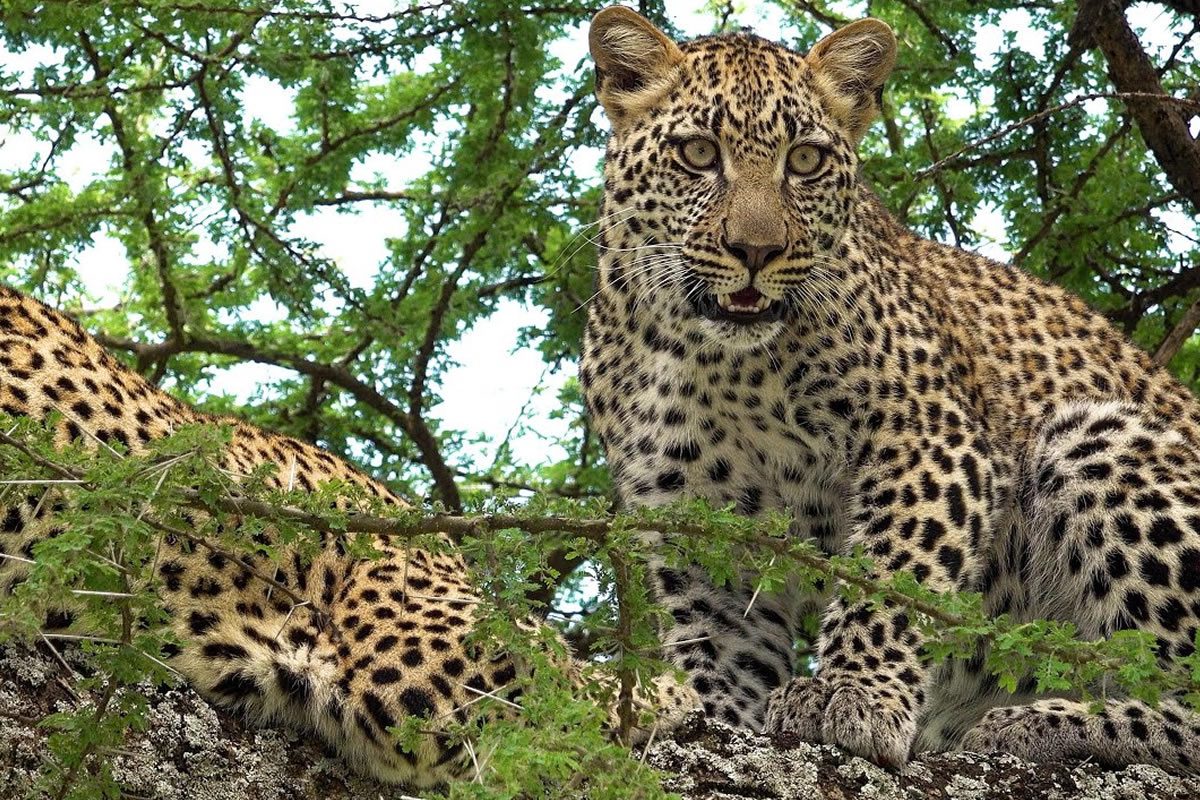
Stretching along a vast plateau between the eastern arm of the rugged Rift Valley and the huge expanse of Lake Victoria, the park covers an immense 14 800 km² (5 700 square miles) on Tanzania’s northern border with Kenya. The park is famous for its vast, open grasslands, which allow for excellent sightings of the abundant wildlife. Tanzania’s oldest game reserve, it is also one of the oldest ecosystems on earth and its climate and vegetation have remained largely untouched for millions of years.
While the Serengeti boasts incredible numbers of resident wildlife, it is perhaps best known as the site of the annual Great Migration, when an estimated three million antelope – mostly wildebeest — migrate to Kenya’s Masai Mara Game Reserve. One of the greatest spectacles in the natural world, the migration follows the seasonal rains, spending the wet season on the south eastern plains of Tanzania and the dry season in the woodlands of north western Kenya. Between January and March the wildebeest give birth on the short grass plains of the south eastern Serengeti. This time of year attracts a vast plethora of predators, from lion to hyena, leopard and cheetah. As the grazing runs low in this area the wildebeest move to the central Serengeti and then the Western Corridor before crossing the Grumeti and Mara Rivers on their journey south in Kenya. Braving the jaws of some of Africa’s largest crocodiles, the river crossings are always a dramatic and emotional sight.